
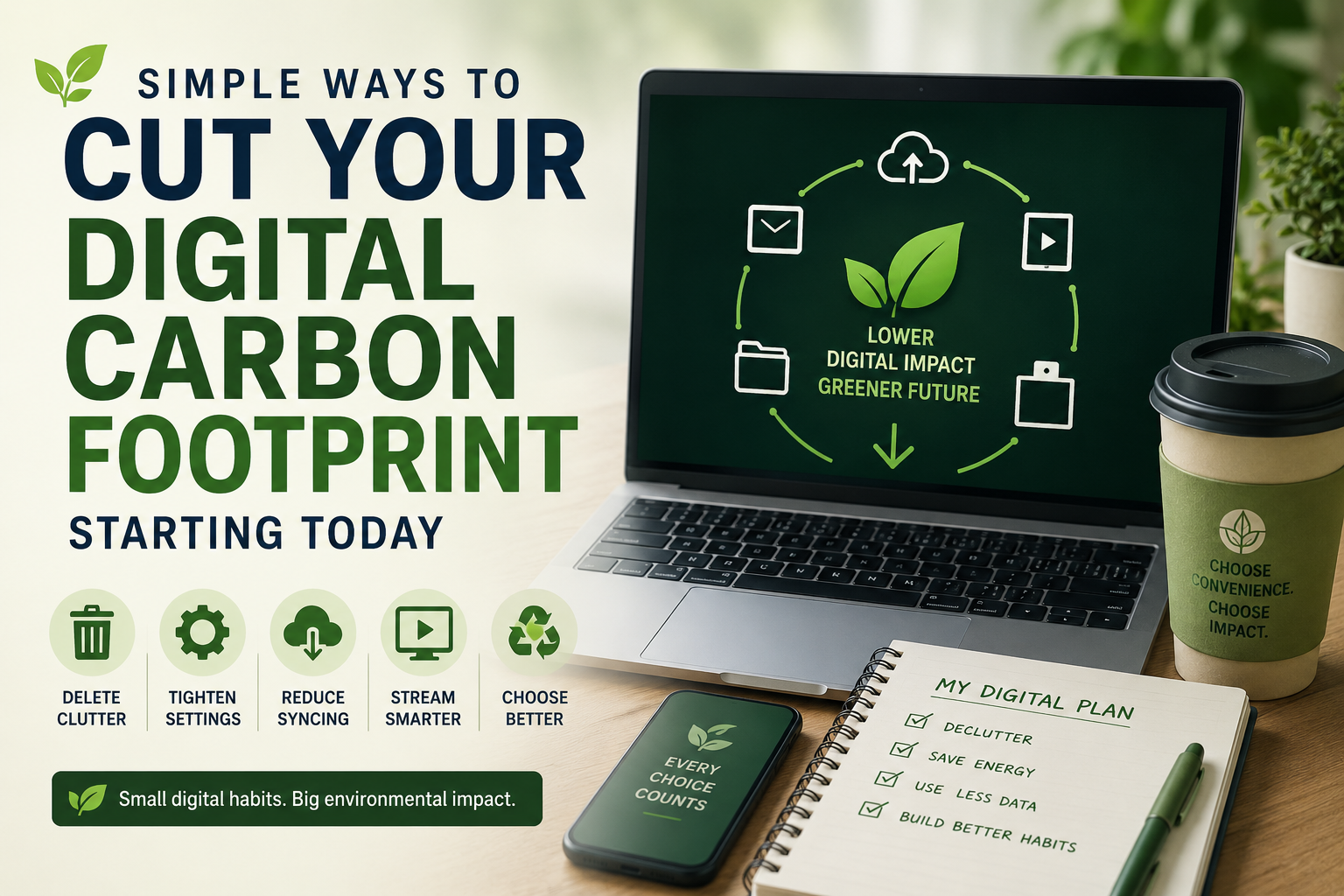
Busy professionals and sustainability-minded households often try to make greener choices, yet daily scrolling, streaming, syncing, and storing quietly creates real digital environmental impact. The challenge is that the environmental impact of technology can feel invisible, so carbon footprint reduction gets treated like something that only happens with cars, flights, and food. A few mindful digital habits can change that, without giving up the convenience that keeps work, friendships, and routines running. With a clearer view of what’s happening behind the screen, everyday decisions start to add up fast.
Build a 15-Minute Plan to Shrink Digital Emissions
This quick habit-change plan helps you identify where your digital life wastes the most energy, then tighten your settings and storage without losing convenience. It matters because small, repeatable tweaks at home and work can quietly reduce demand on devices, networks, and data centers.
- Do a one-day digital behavior audit
Start by listing what you did yesterday across five buckets: streaming, video calls, email, cloud storage, and device time. Mark the top two that happen most often or feel “always on,” because frequency is usually the biggest driver of impact. Keep it simple so you will actually repeat it next week. - Triage your data first (delete, then organize)
Clear the easiest clutter: duplicate photos, old downloads, giant attachments, and forgotten files in cloud drives. The idea behind storing pictures in the cloud being a real energy cost is that keeping less data long-term means less ongoing storage and syncing. Create three folders only: Keep, Archive, Delete, and process in small batches. - Tighten device settings for lower energy use
Turn on auto-sleep, lower screen brightness, and set shorter display timeouts on phones and laptops you use daily. On work computers, enable power-saving mode and shut down at the end of the day, especially if you tend to leave many apps running. These changes reduce wasted idle power without changing how you work. - Reduce “background churn” from syncing and streaming
Set non-urgent apps to manual refresh, pause auto-downloads, and restrict cloud sync to the folders you truly need across devices. For streaming, choose standard definition when you are just listening or watching casually, and download once when you will replay the same content. You are aiming to cut constant data movement, not eliminate entertainment. - Choose two weekly habits and confirm they stick
Pick one storage habit (like a 10-minute Friday clean-out) and one communication habit (like fewer attachments and shorter threads), then put them on your calendar. A useful reminder is that each email sent generates 4 grams of CO2, so small changes in volume can add up fast in busy weeks. After seven days, recheck your top two buckets and adjust one setting or rule.
Swap Commuting for Online Learning to Shrink Emissions
Once you’ve mapped where your digital habits create emissions, look for swaps that cut an entire category at once, like transportation. Earning an online degree can reduce your carbon footprint by eliminating commute-related emissions and trimming campus-related energy use (think daily building operations), while still letting you advance your education through digital coursework on your own schedule. If you’re considering a career-focused track, flexible online business programs can help you build practical skills in accounting, business, communications, or management without the added emissions of regular travel to class. Next, you’ll lock in a handful of “set-and-forget” tech habits that keep your footprint lower every day.
Set-and-Forget Habits for Lower Digital Emissions
Like tidying a room, small tech routines prevent clutter from piling up and keep your impact lower without daily willpower. These habits turn “starting today” into something you can maintain, week after week, as your devices and accounts naturally drift back into energy-heavy defaults.
Power-Saving Settings Sweep
- What it is: Turn on sleep mode, auto-brightness, and scheduled power-down on every device.
- How often: Monthly.
- Why it helps: It cuts wasted screen and idle time energy.
Inbox and Cloud Declutter
- What it is: Delete big attachments, clear spam, and remove duplicate photos and downloads.
- How often: Weekly.
- Why it helps: Less stored data means less always-on background overhead.
Stream Smarter, Not Harder
- What it is: Default to standard definition on phones and avoid autoplay.
- How often: Daily.
- Why it helps: It reduces data transfer and device workload.
“One-Tab” Focus Block
- What it is: Keep one browser window open and close tabs when you switch tasks.
- How often: Daily.
- Why it helps: Fewer active tabs often mean lower CPU use.
E-Waste Exit Plan
- What it is: Donate, trade in, or use responsible recycling options for old electronics.
- How often: Per upgrade.
- Why it helps: It keeps materials in use and out of landfills.
Common Questions About Cutting Digital Carbon
Q: What difference does deleting files really make if data centers run anyway?
A: Storage is not “free,” because keeping data available means ongoing servers, cooling, and backups. Estimates like the carbon impact of data storage show that large, forgotten libraries can add up over time. Start by removing duplicates and giant videos you will never rewatch.
Q: How do I know which settings give the biggest payoff fast?
A: Prioritize screen brightness, sleep timers, and shutting down devices you are not using. Those reduce electricity use immediately and do not depend on you remembering extra steps. Set them once, then spot-check monthly.
Q: Why is streaming quality such a big deal on a small phone?
A: Higher resolution pushes more data and makes your device work harder than it needs to for a small screen. Try standard definition by default, then switch to HD only for “movie night” viewing.
Q: When do good intentions usually fall apart, and how can I prevent that?
A: It often breaks when a change feels like friction, or when you try to fix everything at once. Pick one tiny rule, tie it to a weekly trigger like Friday morning, and keep a 5 minute timer so it stays easy.
Q: Can one person’s choices matter when digital infrastructure is so huge?
A: Yes, because demand scales, and usage habits influence what becomes “normal.” The 100,000 homes comparison for a modern AI data center is a reminder that small reductions, multiplied, are meaningful. Choose the actions you repeat most often, since those compound.
Choose Three Digital Habits That Shrink Your Carbon Footprint
Digital life is convenient, but it’s easy to let streaming, storage, and always-on devices run on autopilot, and that adds up. The fix isn’t tech guilt; it’s a practical commitment to digital sustainability built on mindful choices and simple routines that make digital carbon footprint awareness part of normal life. When that mindset sticks, the impact of mindful tech use shows up as less wasted data, fewer unnecessary cycles, and long-term environmental benefits that compound quietly over time. Small digital habits, repeated weekly, cut emissions without making life harder. Pick three changes today and track what you notice over the next seven days, adjusting for what’s realistic. Those steady choices reinforce encouraging behavior change and build a cleaner, more resilient default for the future.